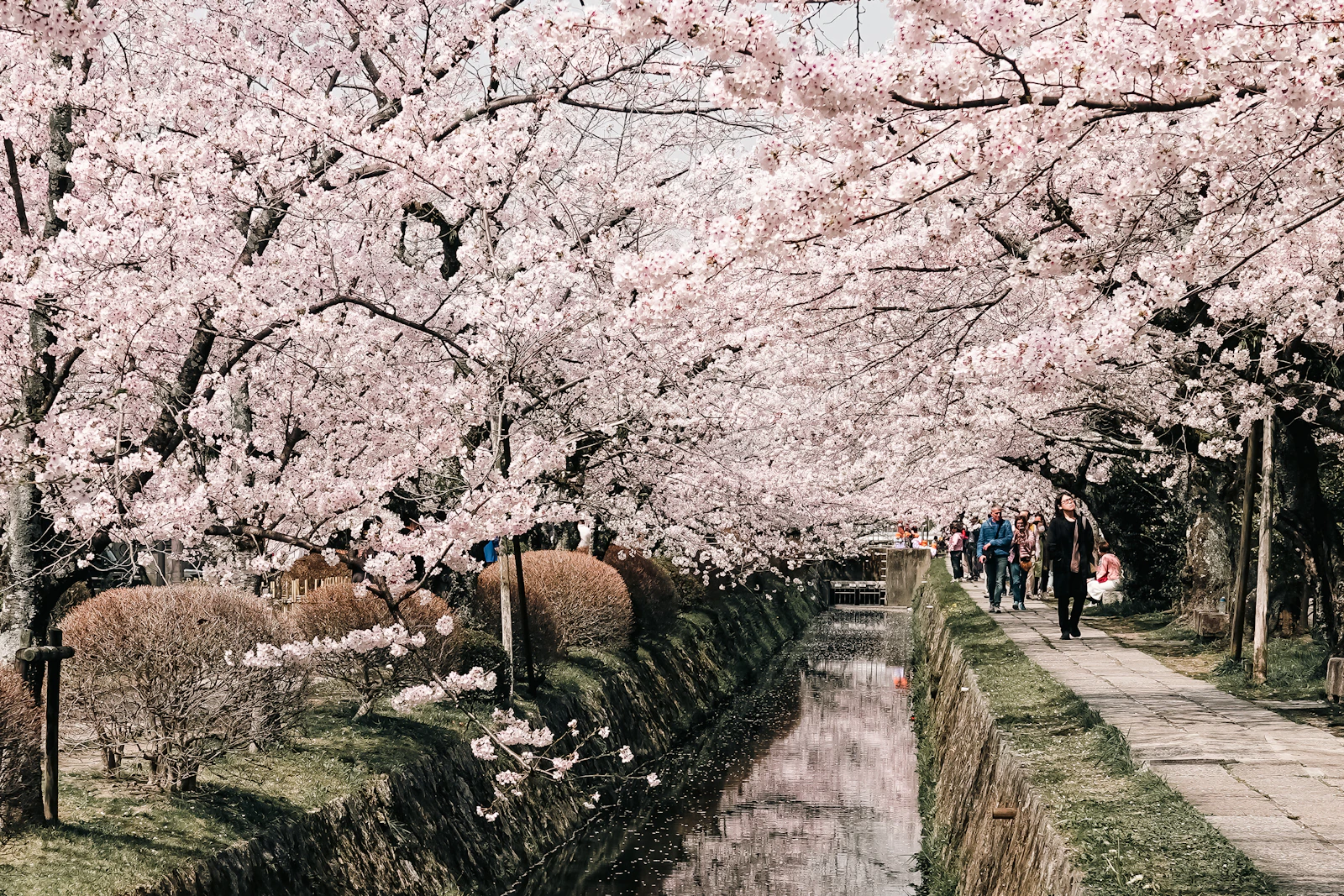
Cherry blossom season in Japan typically reaches Tokyo in late March and Kyoto in early April, then sweeps north into May — but the forecast shifts every year, so the winning itinerary is a Tokyo-then-Kyoto routing that slides with the bloom front rather than betting on a single week. Book hotels six-plus months out, keep the intercity legs flexible, avoid Golden Week, and know the insider alternatives: late-November foliage and Tokyo's crystal-clear winter.
Here is how most cherry-blossom trips get planned: a family picks “the first week of April,” books flights ten months out, and hopes. Some years they land in a blizzard of petals. Other years they land to green leaves and a polite apology from the internet, because the bloom came ten days early — or arrives a week after they've flown home.
En Route Truth: Cherry blossom forecasts shift every year, and peak bloom brings absolute chaos to the famous sites. Sakura isn’t a date you book — it’s a weather front you design a trip to intercept.
The bloom is a front that moves north
The blossoms open in the warm south first and sweep up the country over roughly six weeks — Tokyo typically flowers in late March, Kyoto days behind it, the Japanese Alps and the north weeks later. Japan's forecasting agencies track the front obsessively and revise constantly. Which means a well-designed itinerary has a built-in second chance: a Tokyo-then-Kyoto routing lets a late bloom catch you in the second city even if it missed you in the first, and if the year runs early, the front is just getting to Kanazawa and the mountains as you do. This April we routed a family's spring itinerary around exactly those forecasts, sliding the middle of the trip as the projections firmed up — the flights never changed; the days between them did.
How to book a moving target
- Hotels first, six months or more out — but in the right shape. Bloom-season rooms in Kyoto sell out furthest ahead of anything in Japan. Book the beds early; keep the days between cities flexible. The shinkansen is what makes this possible — intercity legs in Japan can be rearranged in an afternoon.
- Never straddle Golden Week. The holiday cluster spanning late April into early May puts the entire country on the move at once — gridlocked trains, doubled prices, and the serenity you came for nowhere in sight.
- Book the tables when the windows open. The top dining rooms release seats exactly 30 or 60 days out, at midnight Japan time. A blossom trip planned ten months ahead still has reservation homework at day sixty.
- Plan mornings like a photographer. Peak bloom multiplies the crowds at the famous sites. The Philosopher's Path at seven in the morning, petals drifting onto still water, is a private miracle; the same path at eleven is a queue.
The two windows insiders actually prefer
A quiet truth from people who go every year: spring is not Japan's only masterpiece, and it may not even be its best. Late November paints Kyoto in autumn reds with crisp air and none of the spring frenzy — the connoisseur's season. And deep winter, January into February, is Tokyo's best-kept secret: cold, brilliant, dry skies that deliver the year's clearest views of Mt. Fuji, with the city's legendary dining scene suddenly bookable. If your family's calendar can't bend around a forecast, those two windows will treat you better than a gambled bloom week ever could.
Spring 2027 is already booking — the good Kyoto rooms for bloom season will be spoken for by autumn. If you're building a sakura trip, this is the moment to design it around the front instead of a guess. Send us your draft, or start from nothing at all: timing it is the part we love most.
Fair Questions
When is cherry blossom season in Japan?
It's a moving front, not a date: the bloom typically reaches Tokyo in late March, Kyoto days later, and sweeps north through April into early May. Forecasts shift every year — itineraries should be designed to slide with them.
How far in advance should you book a cherry blossom trip?
Book the hotels six months or more out — bloom-season Kyoto sells out furthest ahead of anything in Japan — but keep the days between cities flexible. The shinkansen makes intercity legs easy to rearrange as the forecast firms up.
What if we can't travel during the bloom?
Consider the two windows regulars quietly prefer: late November, when Kyoto's autumn foliage peaks with none of the spring frenzy, and deep winter in Tokyo — January and February bring the year's clearest skies and the best views of Mt. Fuji.