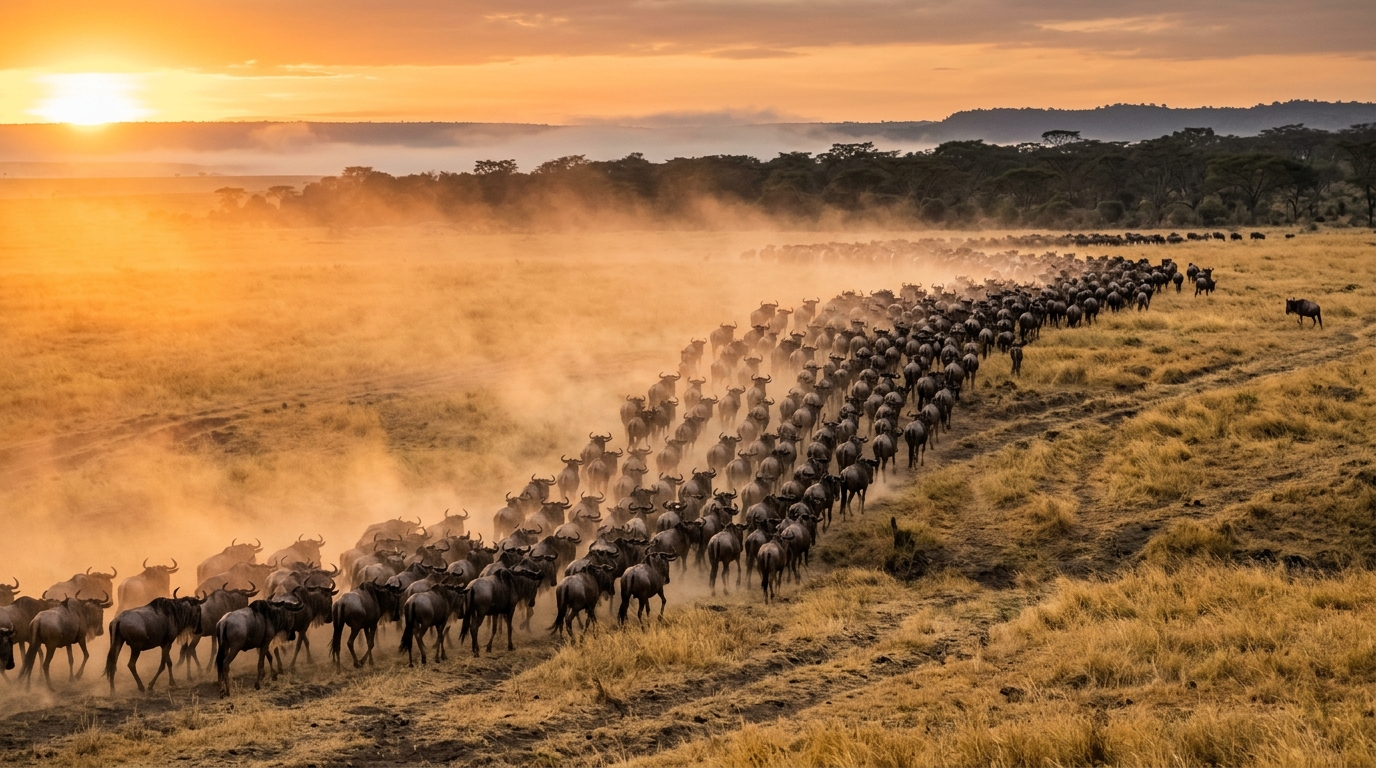
The best time to visit the Serengeti depends on which corridor you book: December–March puts the herds on the southern plains (calving peaks in February), June brings the Grumeti River crossings in the west, and July–October is the northern Mara River season. April and May are the wettest months, when many camps close. The expensive mistake is fixing the camp before the month — choose month, then corridor, then camp.
Picture two families planning the same trip. Both book the same February week in the Serengeti. Both choose camps with nearly identical websites — canvas suites, brass lanterns, a deck facing an endless plain. Both pay serious money.
One family spends four days inside the calving season: wildebeest calving in astonishing numbers each morning, cheetahs hunting before breakfast, more predator activity than most guides see in a season. The other family sees a beautiful, quiet corner of grass — some resident game, long drives chasing rumors, and a lot of radio chatter about where everyone else is.
Neither camp did anything wrong. Nobody lied. The second family just slept half a park away from the show — in an ecosystem the size of Connecticut.
En Route Truth: The Great Migration isn’t an event. It’s a 365-day cycle — and the camp you book either sits inside the month you chose, or it doesn’t.
The map most brochures won’t show you
The Serengeti is roughly the size of Connecticut, and the herds never stop moving through it. December through March, they mass on the southern short-grass plains around Ndutu — February is calving season, with births arriving in a two-to-three-week surge and every predator on the plains attending. As the long rains arrive in April and May, the columns push west and north. June brings them to the Grumeti River in the western corridor — crossings that are less famous than the ones on film, and just as dramatic, with far fewer vehicles competing for position. July through October is the north: the Mara River, the crossings everyone has seen in documentaries. Then the short rains pull them south, and the wheel turns again.
Which means “the Serengeti” in February and “the Serengeti” in August are, for practical purposes, two different destinations — a hundred-plus miles apart, served by different airstrips, photographed by the same drone.
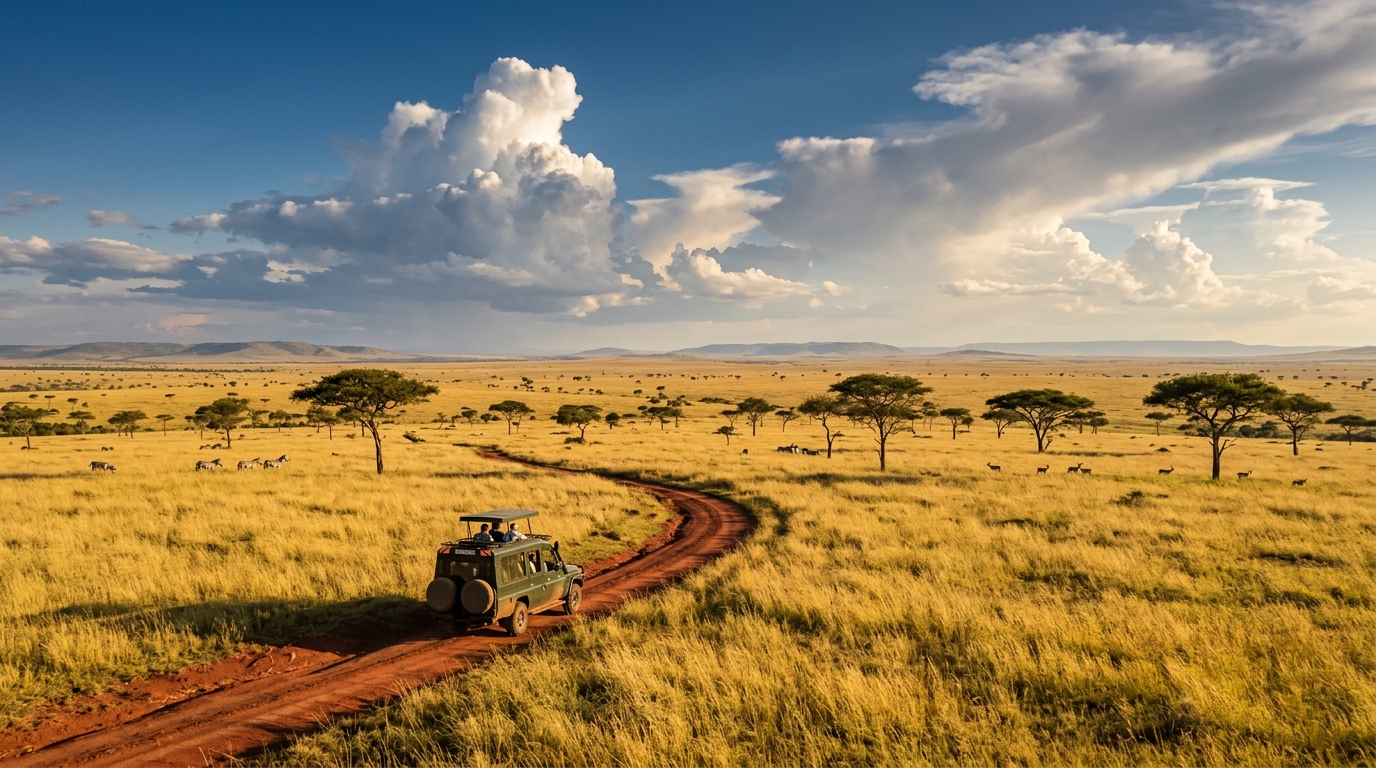
Why the wrong camp keeps getting booked
The July–August river crossing is what safari marketing sells, because it films well. Over the years that footage hardened into a default answer — “go in the dry season” — that is true in general and useless in particular. A camp’s photographs can’t tell you where the herds are in your month; every camp photographs like the center of the universe.
AI planning tools inherit the same defaults, with a new failure mode on top: they pattern-match beautiful hotel names to months without any corridor logic underneath. We regularly see drafted itineraries with a celebrated northern lodge booked for February — a gorgeous choice, pointed at the wrong end of the park. The itinerary reads impeccably. The map disagrees.
This is also why the best operators run mobile camps — whole camps that strike and relocate two or three times a year to sit in the migration’s path. A static lodge is betting you’ll come in its month. A mobile camp follows the show. Booking a fixed luxury lodge in the north while the herds are calving in the south is, quite literally, a $2,000-a-night mistake — you’ll pay peak rates to be far from what you came for.
What most families get wrong
- Choosing the camp first and the month second. Reverse it. Month, then corridor, then camp — in that order, every time.
- Assuming a river crossing is bookable. Crossings are weather-dependent and famously indifferent to your schedule; they reward patience and luck. Calving season is the more reliable spectacle — the geography is predictable even when the drama isn’t.
- Booking April or May expecting peak wildlife. These are the wettest months; many of the best camps close entirely. It’s a common and expensive miscalculation.
- Treating July–August as the only answer. February brings fewer vehicles, up to a thousand calves dropping a day in a single corridor, and predator density that rivals anything in peak season. June’s Grumeti crossings are the connoisseur’s pick. Kenya recently doubled Masai Mara park fees during crossing season — the market is telling you exactly when everyone else goes.
- Assuming every luxury camp has air conditioning. Many of the finest rely on canvas cross-breezes and altitude. If climate control is a dealbreaker, it has to be said in the planning phase, not discovered on night one.
The moment this is all for
Get the geography right and the reward is absurdly disproportionate: sundowners on a granite kopje while a thunderstorm rolls gold and violet across the plains, the herds a moving shadow to the horizon. No restaurant view on earth competes. It costs the same as getting it wrong.
When we build a safari (here's a real migration-season itinerary, corridor logic included), the first question isn’t which camp — it’s which week can you actually travel? The month picks the corridor. The corridor picks the camp. If your dates are fixed by a school calendar, that’s not a limitation; it’s the design brief.
Already holding a safari plan — yours, or your AI’s? Send it over. We’ll tell you which corner of the park it books you into, and whether the herds will be there when you are.
Fair Questions
When is the best time to visit the Serengeti?
It depends which Serengeti you mean. December through March puts the herds on the southern plains, with calving in February. June brings the Grumeti River crossings in the west. July through October is the north and the Mara River. April and May are the wettest months — many camps close entirely.
What is a mobile safari camp?
A full camp that strikes and relocates two or three times a year to stay in the migration's path — the structural answer to herds that move on rain, not calendars. Booking one is the closest thing to a guarantee that you'll be in the right corridor for your month.