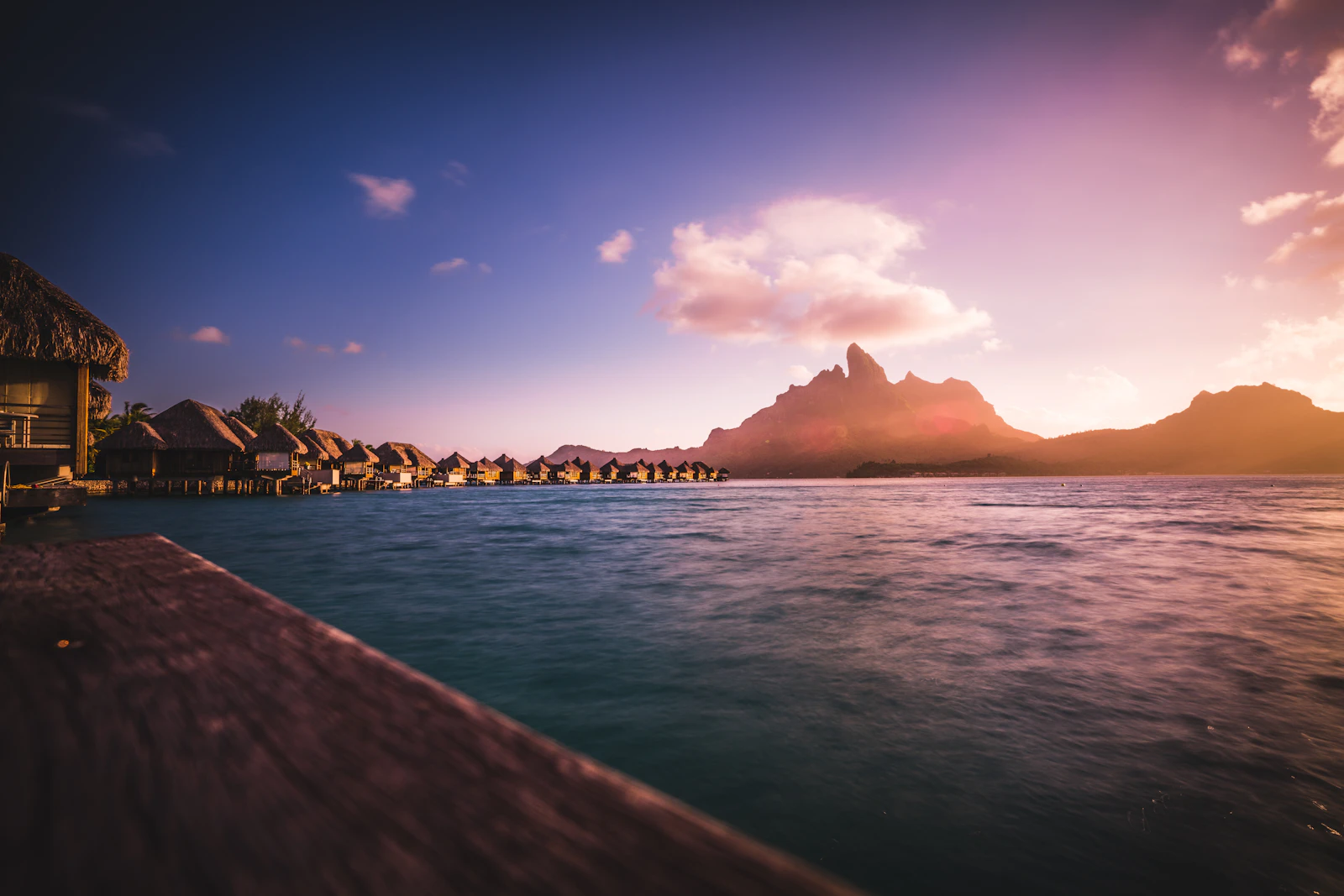
Bora Bora works beautifully for families if you design around three things: travel in the May–October dry season, book the three-leg journey (eight hours to Papeete, a fifty-minute island hop, then a boat) as one chain, and split the stay — beach villa for the week, overwater bungalow for the finale. Brief dietary needs to the resort weeks ahead; on a private islet, nothing is improvised.
Nobody needs convincing on Bora Bora. The glass-bottomed bungalow, the electric-blue lagoon, Mount Otemanu standing over all of it — the destination sells itself before you've said a word. What families actually need is the part nobody screenshots: how you get three kids, two suitcases of swim gear, and one dietary restriction onto a private islet in the middle of the South Pacific without the dream fraying in transit.
En Route Truth: In Bora Bora, the resort you choose is really a view and a logistics chain you choose. The luxury resorts on the eastern motus — St. Regis, Four Seasons — look back at Mount Otemanu, which is why their skyline is the one you recognize. Book the wrong side of the lagoon and you're facing away from the postcard.
The journey is three legs, not one
The Lagoon, Mapped
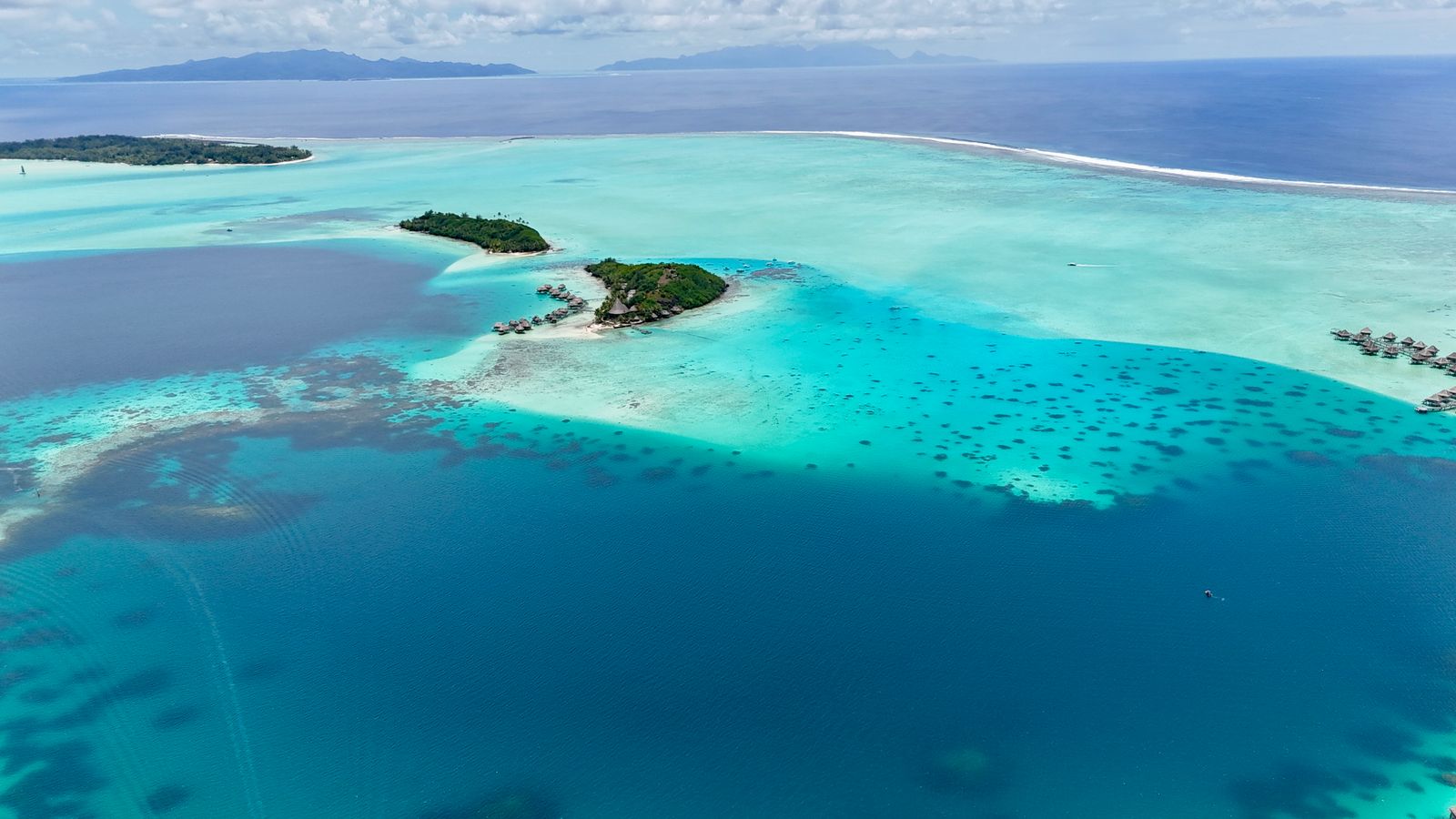
From the West Coast it's roughly eight hours to Papeete, Tahiti. Then an inter-island hop — about fifty minutes — to Bora Bora, where the airport sits on its own reef islet: you land on a strip of coral surrounded by lagoon, and the final leg of your journey is by boat. The good resorts run their own launches; the arrival across the water, kids hanging over the rail, is genuinely one of the best moments of the trip. The planning implication: those three legs have to be booked as one chain. Inter-island flights carry tighter baggage rules than your international carrier and sell out around holiday weeks, and a missed connection in Papeete costs you a night either way — which is why the smart move is to build the Papeete overnight into the outbound deliberately: a soft landing rather than a risk.
Should you book an overwater bungalow with kids?
Every family wants the overwater bungalow. With a toddler, an overwater bungalow is a beautiful anxiety machine — open decks, ladders straight into deep water, and railings designed by people photographing sunsets, not chasing four-year-olds. The move that works: the split stay. Beach or garden villa for the family's main run — sand at the door, pool in reach — then move to overwater for the final nights once the kids have proven their sea legs, or keep one overwater night just for the parents while the kids camp with the grandparents. You get the photo and the sleep.
What most families get wrong
- Booking January or February. The wet season brings heavy tropical rain and overcast skies — the exact opposite of what you flew forty hours for. May through October is the window: trade winds, low humidity, lagoon like glass. December is rainy and busy at once — festive-season demand without dry-season weather.
- Underestimating the food math. You are captive on a private motu where everything arrives by boat. A burger can cost $50. Accept the premium as the tax for paradise — and then plan around it: half-board or a meal package usually beats à la carte for a family, priced before you go rather than discovered on the first bill.
- Sending dietary needs on arrival. The resorts handle allergies and preferences impressively well — for what's on the island. Nothing is improvised on a motu; the kitchen orders on a boat schedule. A dietary brief sent weeks ahead means the resort provisions for your child; the same request at check-in means a week of workarounds.
- Expecting a town. Bora Bora is a pure resort destination — no strip to stroll, no restaurant row. If your family gets restless on one property, that's a signal to build in lagoon days: snorkel safaris, ray and reef-shark swims, a picnic on a private motu.
The moment it's all for
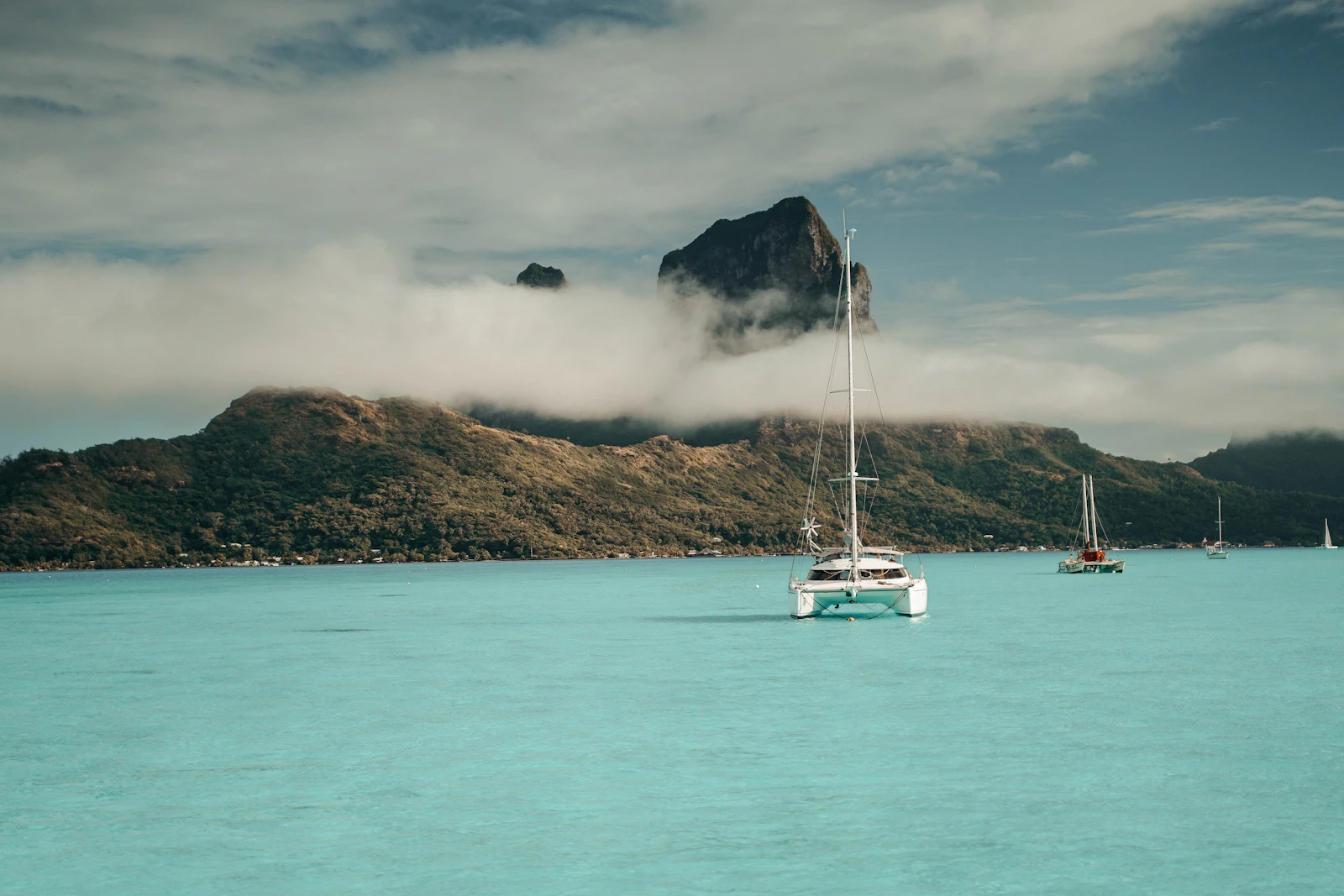
Breakfast arriving at your deck by outrigger canoe, the lagoon still, Otemanu going gold — and a seven-year-old diving off the steps into water so clear she looks suspended in air. That's the frame the whole chain of flights and boats exists to deliver.
If Bora Bora is the milestone trip on your list — honeymoon redux, a big anniversary, the once-ever family splurge — this is exactly the kind of plan we build end to end, transfer chain included. Or if you've already drafted it, send the plan over for a second opinion: we'll pressure-test the connections, the villa choice, and the meal math before you commit.
The places in this piece
- Motu Mute Airport — Bora Bora's runway on its own reef islet; every arrival finishes by boat across the lagoon.
- Vaitape — the island's only town, on the western shore.
- Mount Otemanu — the basalt peak in every postcard; resorts on the eastern motus face straight at it.
- The eastern motus — St. Regis and Four Seasons territory, with the classic Otemanu view.
- Matira Beach — the island's celebrated public beach, at the southern tip.
Fair Questions
When is the best time to visit Bora Bora?
May through October — the dry season, when trade winds keep humidity low and the lagoon is calm. Avoid January and February, which bring heavy tropical rain and overcast skies. December is busy for the festive season without dry-season weather.
Is Bora Bora good for kids?
Yes, with the right design: a beach or garden villa for the main stay (overwater bungalows and toddlers don't mix), lagoon excursion days to break up resort time, and dietary needs briefed to the resort weeks ahead — everything on a private islet arrives by boat.
How do you get to Bora Bora from the US?
Roughly eight hours from the West Coast to Papeete, Tahiti, then a fifty-minute inter-island flight to Bora Bora, then a boat transfer from the reef-islet airport to your resort. The three legs should be booked as one chain, and an overnight in Papeete on the way out is a smart buffer.