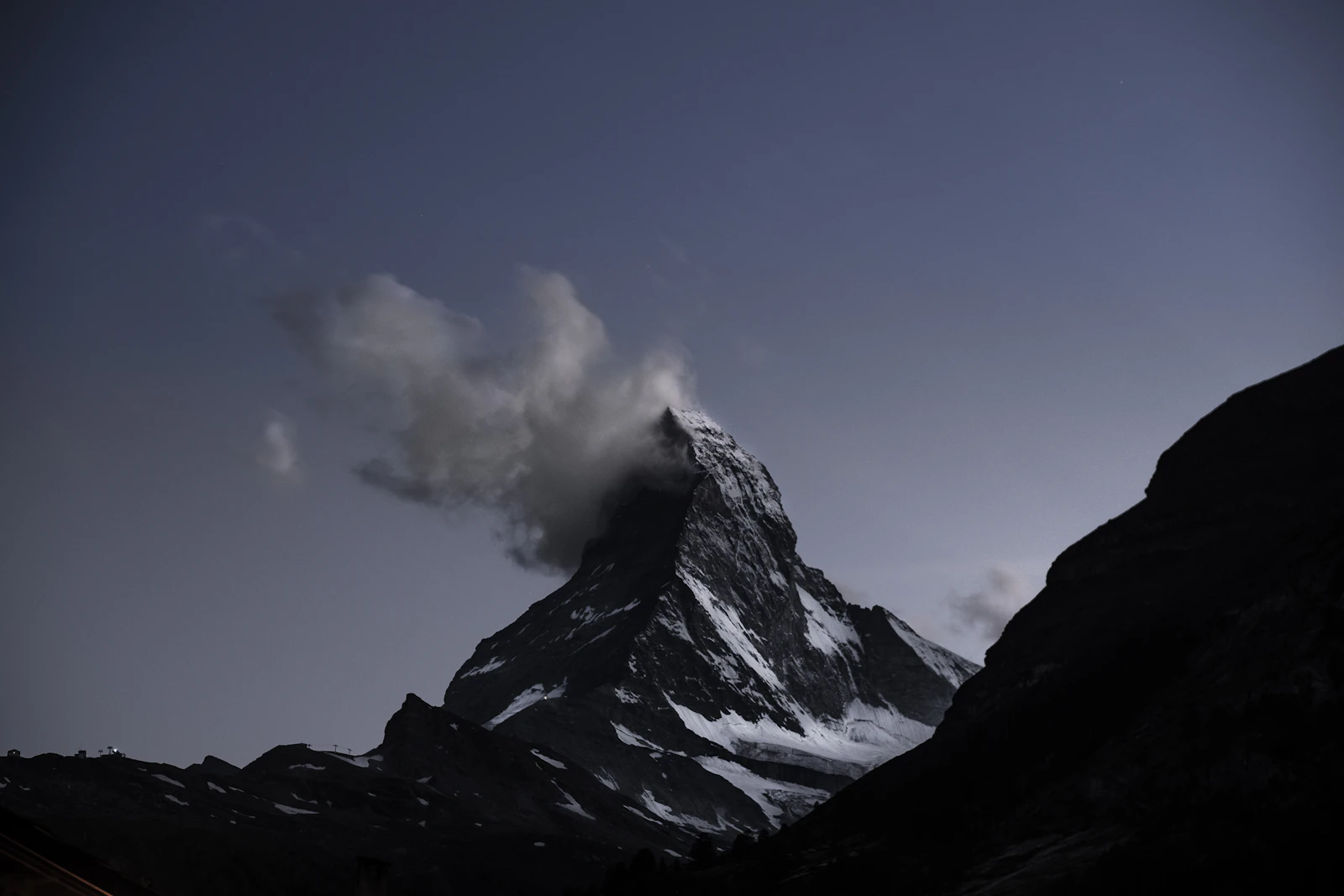
Switzerland is the easiest country on earth for a group trip because the trains do the merging: friends land in Zurich or Geneva and converge by rail on one base — the Jungfrau region is under three hours from either airport. Book a chalet over a hotel, hike July through September on lift-served balcony trails, and give Zermatt three nights if the Matterhorn matters.
The group trip has a math problem before it has an itinerary: six friends, four departure cities, three airlines, one week. Most destinations punish this — someone lands far from someone else, a van gets rented, half a day evaporates. Switzerland is the rare country engineered to solve it. Two major gateways, Zurich and Geneva, and a rail network so precise that “meet at the chalet at four” works for people landing at opposite ends of the country.
En Route Truth: In Switzerland, the trains do the merging. Nobody gets picked up, nobody rents the van — everyone lands, boards, and converges. The group trip starts on time because the country runs on time.
Decision one: the convergence point
Pick one base and let everyone rail to it. From Zurich or Geneva, the Jungfrau region — Interlaken, and above it the car-free villages of Wengen and Mürren — is reachable in under three hours from either airport, which makes it the natural merge point for a scattered group. The mechanics we set up before anyone flies: each traveler gets her exact train itinerary — departure platform, connection, arrival time — in the shared doc, and the first dinner is booked before anyone boards a plane. A group that converges over a booked table starts as a trip; a group that lands into “so what's the plan?” starts as a negotiation.
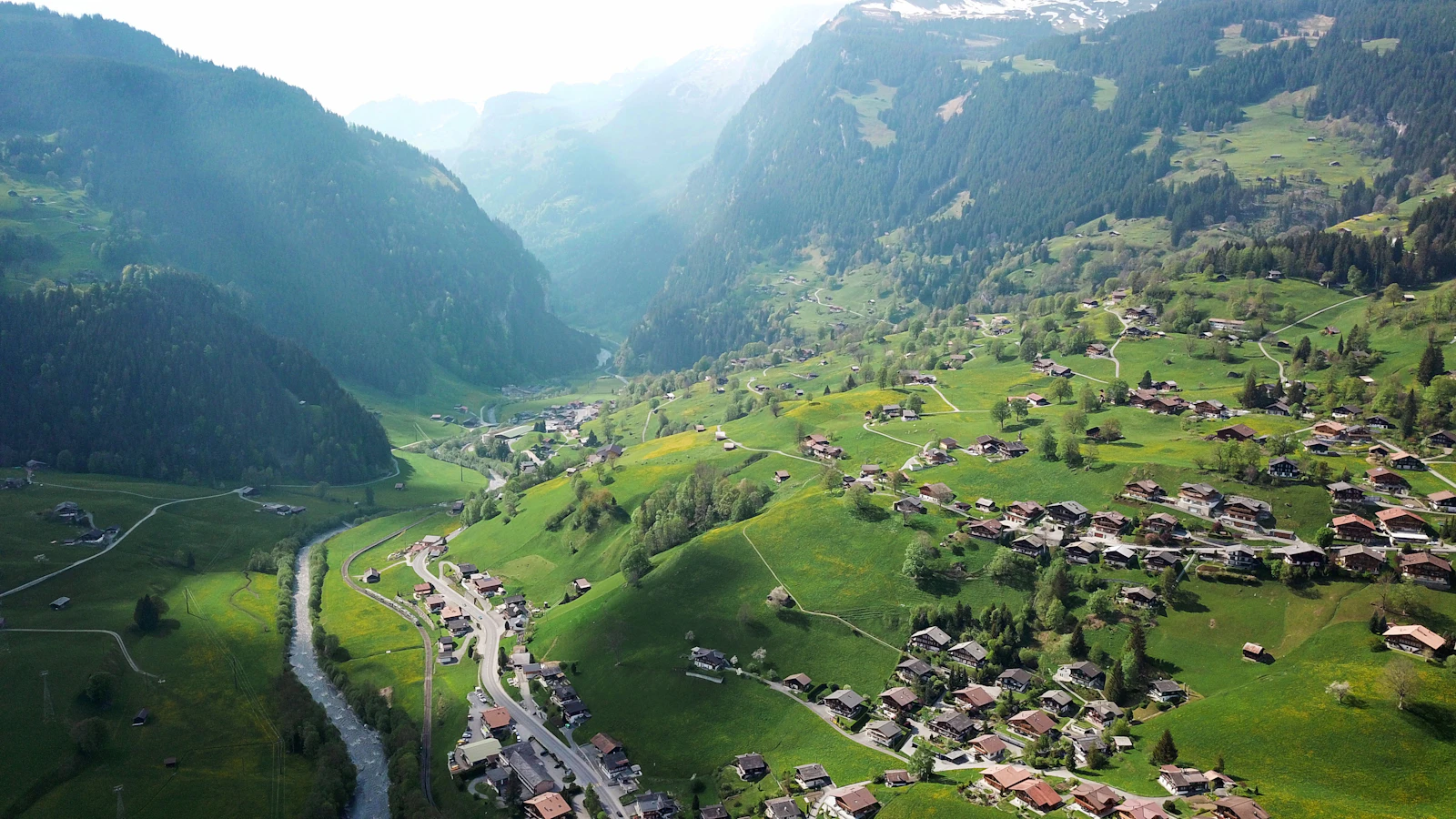
The Convergence, Mapped
Decision two: chalet or hotel (the honest trade)
For a friends' trip, the chalet or apartment usually wins — one long breakfast table, a kitchen, a balcony with the Eiger in your face, and the late-night kitchen-table hours that are the actual point of a girls' trip. The honest trade: no daily housekeeping, no concierge, and the good chalets in the good villages book out months ahead for July and August. The hybrid we like: chalet for the week, plus one splurge — a spa afternoon or a single night somewhere storied — so the trip gets both the kitchen table and the robe-and-slippers moment.
Decision three: the rail pass math
For a week of moving around, the Swiss Travel Pass — unlimited trains, buses, and lake boats — usually beats point-to-point tickets, and its lesser-known trick is that it covers the lake steamers, which are the most underrated afternoon in the country. Two footnotes the group needs to know: the famous scenic trains (the Glacier Express above all) require seat reservations on top of any pass, booked well ahead in summer; and Swiss rail will forward your luggage station to station — send the bags ahead, hike the afternoon, find the suitcases waiting. That one service turns transfer days into trip days.
Hiking for a group of mixed enthusiasm
- Ride up, walk the balcony, ride down. The Swiss trick is that lifts do the climbing: routes like Männlichen to Kleine Scheidegg hand you two hours of ridgeline views for almost no elevation gain — spectacular for the fit and the jet-lagged alike.
- Choose trails with bail-out points. The best group hikes have a lift station midway, so the photographers can linger and the summit-chasers can push on, and everyone meets for rösti at the top station.
- July through September is the window. June still hides snow on the high trails; September brings the clearest air and thinner crowds. April, May, and much of the shoulder are dead seasons in the mountain villages — lifts close, hotels shutter.
- Budget three nights if the Matterhorn matters. Zermatt's icon makes its own weather and hides for days at a time. Three nights is the minimum for a clear window — and Zermatt is strictly car-free: you park in Täsch and ride the twelve-minute shuttle train in, met by your hotel's electric cart.
The moment it's all for
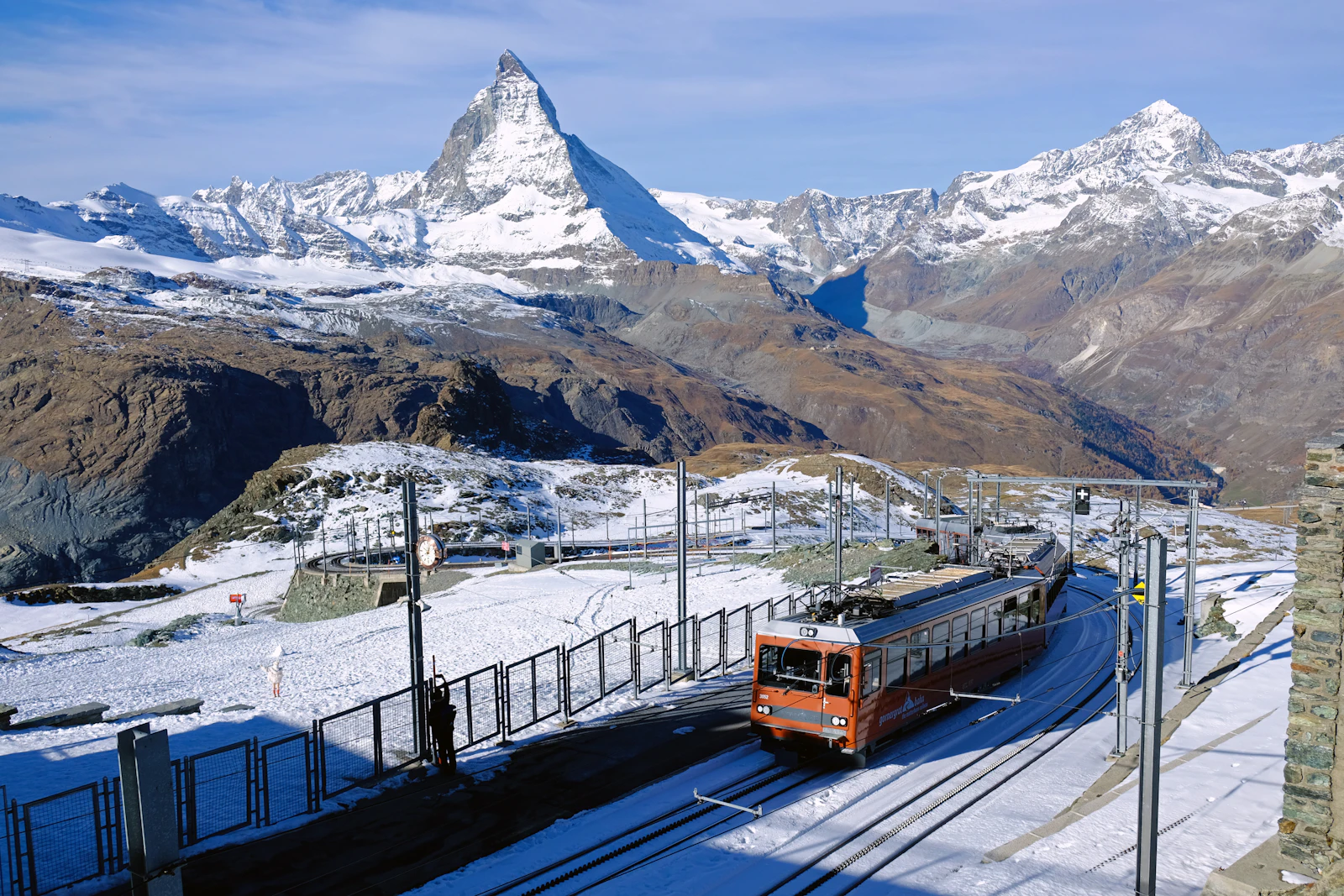
The Gornergrat railway at dawn, ten thousand feet up, the Matterhorn going pink before the village below has poured its first coffee — and that evening, truffle fondue in a wood-paneled room while the group relitigates the day's photos. That's the frame the spreadsheets exist for.
Multi-city convergence is one of the things we quietly do best — one call with the group, and everyone gets a door-to-chalet itinerary that survives contact with four different airlines. Planning one for a milestone birthday or a long-overdue reunion? Bring us the group chat. Or if the plan's already drafted, send it over for a second opinion before anyone books.
The places in this piece
- Zurich (ZRH) and Geneva (GVA) — the two arrival airports; both put the Jungfrau region under three hours away by rail.
- Interlaken — the merge point between two lakes, where a scattered group becomes a trip.
- Wengen — the car-free chalet village on the shelf beneath the Jungfrau; the group's base.
- Grindelwald — the balcony-trail valley: lift-served hikes with bail-out stations for mixed-fitness groups.
- Zermatt — car-free, reached by shuttle train from Täsch; give it three nights for a clear Matterhorn window.
- The Matterhorn — best met at dawn from the Gornergrat railway, ten thousand feet up.
Fair Questions
Do you need a car for a Switzerland trip?
No — and for the mountain villages you often can't use one. Zermatt is strictly car-free: you park in Täsch and ride a twelve-minute shuttle train in. The rail network handles everything, including forwarding your luggage station to station while you hike.
When is hiking season in the Swiss Alps?
July through September. June still hides snow on the high trails, and September brings the clearest air with thinner crowds. April, May, and much of the shoulder season are dead in the mountain villages — lifts close and hotels shutter.
Is the Swiss Travel Pass worth it for a group?
For a week of moving between regions, usually yes — it covers trains, buses, and the underrated lake boats. Two caveats: the famous scenic trains like the Glacier Express require paid seat reservations on top of any pass, and point-to-point tickets can win for a single-base trip.